What happens when educators get a little extra backing to implement the extra support their students need? In three Delaware schools, it looks like peer mentoring, cultural belonging, and hands-on life skills.
This year, three Delaware educators received grants from The NEA Foundation: Katherine Mancuso of Sussex Central High School, Dr. Sinelia Peixoto of Georgetown Middle School, and Jane Binnersley of The Bayard School. Their projects are different, but all three grew out of work that was already underway in their schools.
Peer Mentors for Multilingual Learners
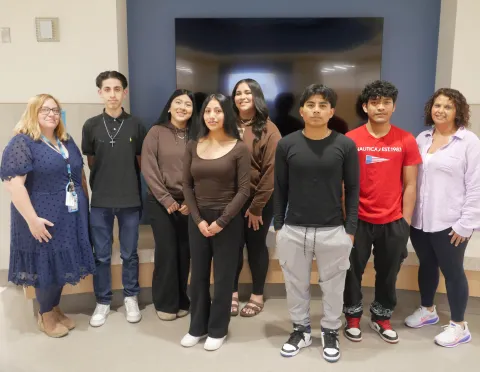
“This program is really about shifting mindsets,” Mancuso said, describing her project, Multilingual Mentors: Peer Tutoring for MLL Student Success. “Helping students see themselves as capable, valued, and powerful contributors to their school community.”
At Sussex Central, that work starts with multilingual learners helping each other. Her program is aimed mainly at students in grades 9 and 10 who need extra support in core classes, while multilingual students in grades 11 and 12 serve as mentors. Students are identified through teacher recommendations, WIDA data, and self-referral. The mentoring itself includes homework help, literacy and vocabulary support, study skills, and time to build trust and confidence.
But Mancuso made clear that the project is not just about tutoring.
“Too often, multilingual learners are viewed only through what they lack rather than through the strengths they bring, including bilingualism, resilience, and cultural knowledge,” she said.
That belief is at the center of the program. Mancuso wants older students to be seen not just as learners receiving support, but as leaders who can guide younger peers through many of the same challenges they themselves have faced .
“Peer mentoring is powerful because it’s relatable,” Mancuso said. “Students often feel more comfortable learning from someone with shared experiences.”
Grant funds will support food and snacks, mentor training, academic and bilingual materials, student incentives, and a family showcase event. The goal is to make the program easier to sustain and easier for students to access.
Building Belonging Through Culture and Connection
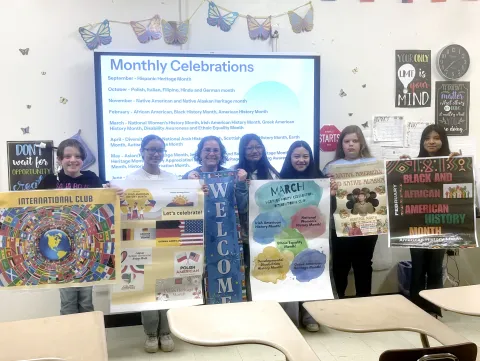
At Georgetown Middle School, Dr. Sinelia Peixoto’s project also starts with a need she has been seeing for a while.
“My goal is to promote cultural awareness, tolerance, and acceptance, providing a room where students feel like they belong,” she said. Her grant supports the school’s Equity and International Club, an expansion of the Equity Club she has already been leading.
For Dr. Peixoto, the work is personal. She is an immigrant herself and said many students arrive carrying fear and uncertainty, unsure whether people around them understand what they are going through.
That is why she works to make her classroom feel safe and familiar, a place where students can talk openly, learn about each other's culture, and feel less alone. She said that a sense of safety is closely tied to motivation. When students feel accepted, they are more willing to take part, push themselves, and believe they can succeed.
“When you don’t feel that you belong anywhere, you want to get out of there,” Dr. Peixoto said. “But when that feeling shifts toward acceptance, students begin to see themselves differently.”
Dr. Peixoto said she has watched that change play out in real ways, including stronger effort, better engagement, and more confidence in academic work. Her students began pushing themselves harder because they felt more certain of who they are and what they could do.
The club reflects that approach. Students research their names, family origins, and cultural history. They talk about identity, heritage, and what it means to move across countries and languages. They sample international foods, survey their peers, and support community-focused events like their school’s Hispanic Festival.
Dr. Peixoto has also used the work to draw more families into school life. After one family night fell flat, she helped shift the outreach into Spanish and made a more direct effort to welcome Hispanic families. The response improved. Much like the students, families appreciate the feeling of familiarity and acceptance that this improved outreach created.
A Lab Upgrade With Real-Life Impact
At The Bayard School, Binnersley’s grant is built around a different kind of student need, but the thinking is similar. Her Student Success Grant will help upgrade the school’s Family and Consumer Lab with new ovens, a washer, dryer, dishwashers, a mixer, and demonstration tables. The project is meant to give students stronger access to culinary learning and everyday life skills that can help build confidence and independence.
Binnersley said those upgrades would open the door to lessons students cannot fully access right now. That includes cooking in a better-equipped space, learning kitchen safety more clearly, and practicing daily skills such as sorting laundry, removing stains, and using a washer and dryer. Right now, she said, students work with a more limited setup and portable appliances. The new equipment would allow more students to participate and make fuller use of a lab space that already has a lot of potential.
“What are we cooking today?” is one question Binnersley hears all the time from her students. That excitement is part of what keeps pushing the project forward.
She said many students are eager for hands-on learning, and some are already carrying major responsibilities at home. She sees the upgraded lab as a way to help students build practical skills now, so they feel more confident later, whether that means cooking for themselves, exploring culinary programs in high school, or simply managing everyday adult tasks with less stress.
“I see them with their aprons on, split up in different groups, with a recipe in front of them,” Binnersley said, describing what she hopes the space will look like once the project is fully in place. She also wants the lab to reach beyond her own classroom, with room for after-school use and other school activities. Like the other two grant recipients, she is not starting from scratch. She is building on work already underway and giving students more of what they want and need.
Taken together, the three projects tell a pretty simple story. Each educator saw something in front of them, whether it was a gap in support, a need for belonging, or a lack of access to practical skills. Then they built a project around it. Now, with grant support behind them, they are advancing that work even further.