Key Takeaways
- The counties’ failure to conduct regular reassessments caused real and direct harm to our public school students.
- School districts derive about 30 percent of their funding from local property taxes.
- Requiring our schools to beg taxpayers for every local dollar needed to keep pace with inflation, population growth and student need has forced poorer communities to overtax themselves just to provide something close to the same level of service as wealthier districts.
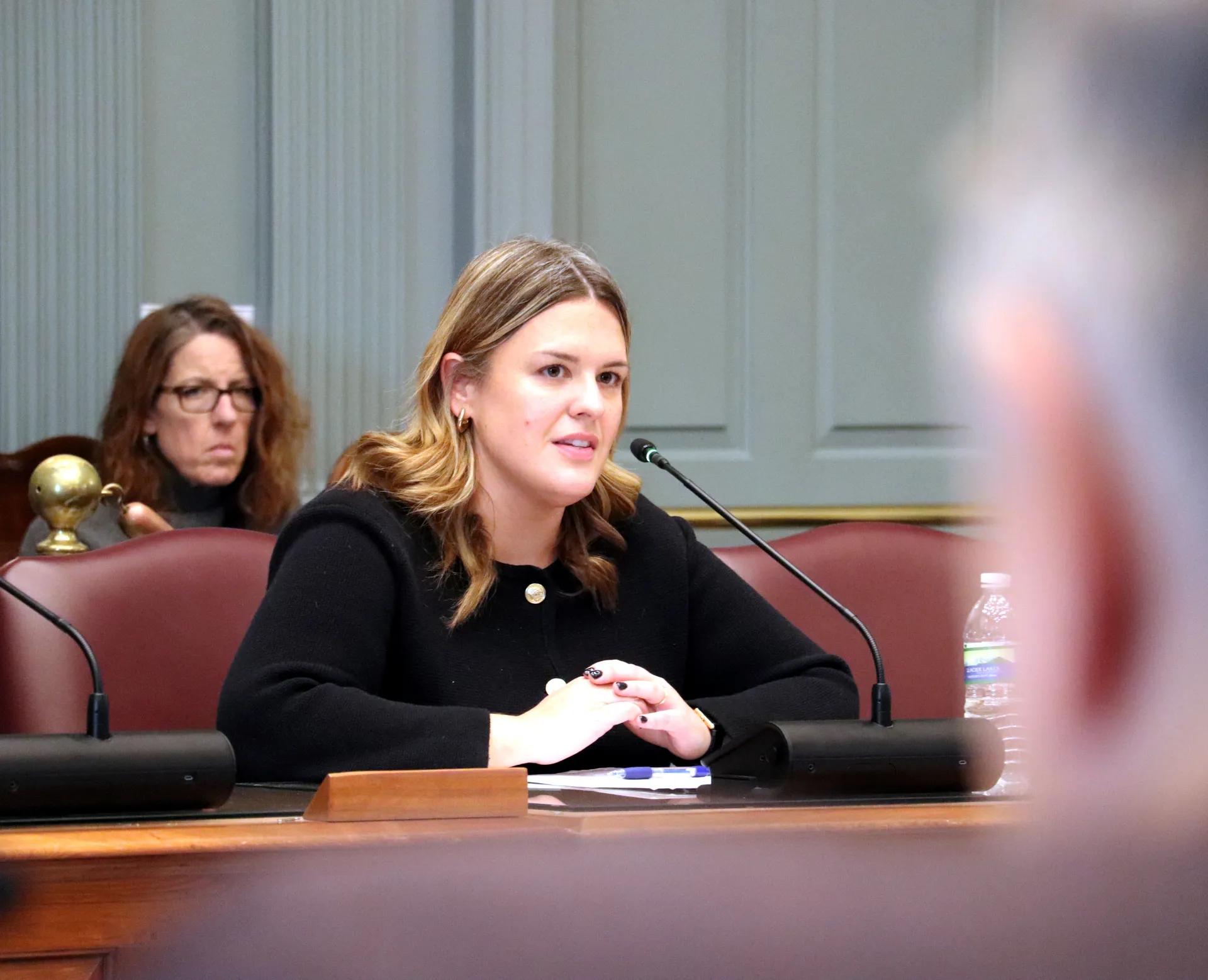
My name is Taylor Hawk, and I am proud to represent the nearly 14,000 active and retired educators represented by DSEA — many of whom are or will be in schools educating Delaware children across the state today.
Thank you to the members of the Senate and House for the opportunity to speak today.
Over the last three hearings you’ve heard a lot about the complications that arose from Delaware’s first comprehensive property reassessments in generations and concerns about taxpayer fairness.
Those are all valid and necessary points of consideration for our state moving forward. But missing from many of these conversations is a fundamental question about how we want to fund our public schools.
The counties’ failure to conduct regular reassessments caused real and direct harm to our public school students. By failing to reassess properties, Delaware created a system that locked in 40-year-old disparities in the tax bases of our school districts.
Again, our school districts derive about 30 percent of their funding from local property taxes.
And by requiring our schools to beg taxpayers for every local dollar they need to keep pace with inflation, population growth and student need, this system has forced poorer communities to overtax themselves just to provide something close to the same level of service as wealthier districts.
Cape Henlopen, for instance, invests significantly more on each of its students than any of its neighbors, despite having one of the state’s lowest school tax rates. While right next door, the Milford School District is spending $3,000 less per student despite families in that community paying almost double the tax rate.
Unsurprisingly, Cape has nearly double the proficiency rate in English and more than double the proficiency rate for Math than Milford.
How is that possible?
Families in Ellendale care just as much about their children as families in Ellendale. Teachers in Milford are trying just as hard as our educators in Cape. Students are attending school in those districts at nearly identical rates.
The single overriding difference between these two neighboring communities is inescapable: the total value of all properties in Cape is $39 billion while the total value of properties in Milford is less than $6 billion.
That means Cape can keep its tax rate low and provide significantly more staff, programs and resources to its students, while Milford has to overcharge its residents just to provide a fraction of the supports.
We see this exact same dynamic play out across Delaware.
State leaders have long understood these disparities in local property wealth. That’s why the Delaware General Assembly created a state-funding mechanism in the late 1960s that was intended to help put districts like Cape and Milford on more equal footing called the Equalization formula.
But over time, the failure of our counties to conduct assessments led to a breakdown of the formulas used to calculate equalization funding until the state essentially threw its hands up and froze the entire system in 2009.
And that’s not the only funding mechanism created by the General Assembly that’s been undermined by county inaction. The provision added to Delaware Code in 1972 that permits school boards to approve a revenue increase of up to 10% following a reassessment also couldn’t be used for decades because no reassessment was ever completed.
As a result, school districts for decades now have had to rely entirely on Delaware’s referendum system, which is one of the most restrictive, local-revenue raising processes in the nation.
And that has disproportionately harmed low-property-wealth districts where the residents are already overtaxed, leading those districts to fall further and further behind. That, in turn, leads to discontent and mistrust, which makes voters even less likely to approve the funding increases those districts desperately need to meet the standards our state sets for them.
These issues of funding and performance are deeply connected, and we can’t solve one without addressing the other.
And the stakes are highest for children. Under-resourced districts struggle to hire the staff needed to reduce class sizes, provide individualized reading and math support, and respond effectively to students’ behavioral needs.
This inequity also affects educators. Educators who want to serve the communities they know and love are often forced into an impossible choice: stay in their hometown schools or drive 30 minutes away to earn thousands more for their families.
That’s exactly why the General Assembly created the Public Education Funding Commission last year to develop a roadmap for improving how the State of Delaware and our local communities fund public education. And the PEFC has been working hard to finalize a series of recommendations for the Legislature this spring.
Back in August when the Legislature convened a special session meant to ease the financial burden that reassessment, DSEA urged you to fix reassessment without harming our schools with piecemeal funding fixes
And today I am again asking this joint committee to focus on making sure the counties’ reassessment process is fair, equitable and based on sound data while avoiding the temptation to layer on new Band-Aids that could make a broken system worse.
We can’t design a fair school-funding system without reliable property valuations. If we hope to allocate resources based on a district’s true tax base, the underlying numbers must be accurate. Our ability to build a funding system that is equitable, transparent, and sustainable depends on getting this right.
Our schools and our communities deserve a holistic approach that balances the financial interests of Delaware taxpayers with the overwhelming need to improve academic performance for all students, regardless of where they live.
Thank you.